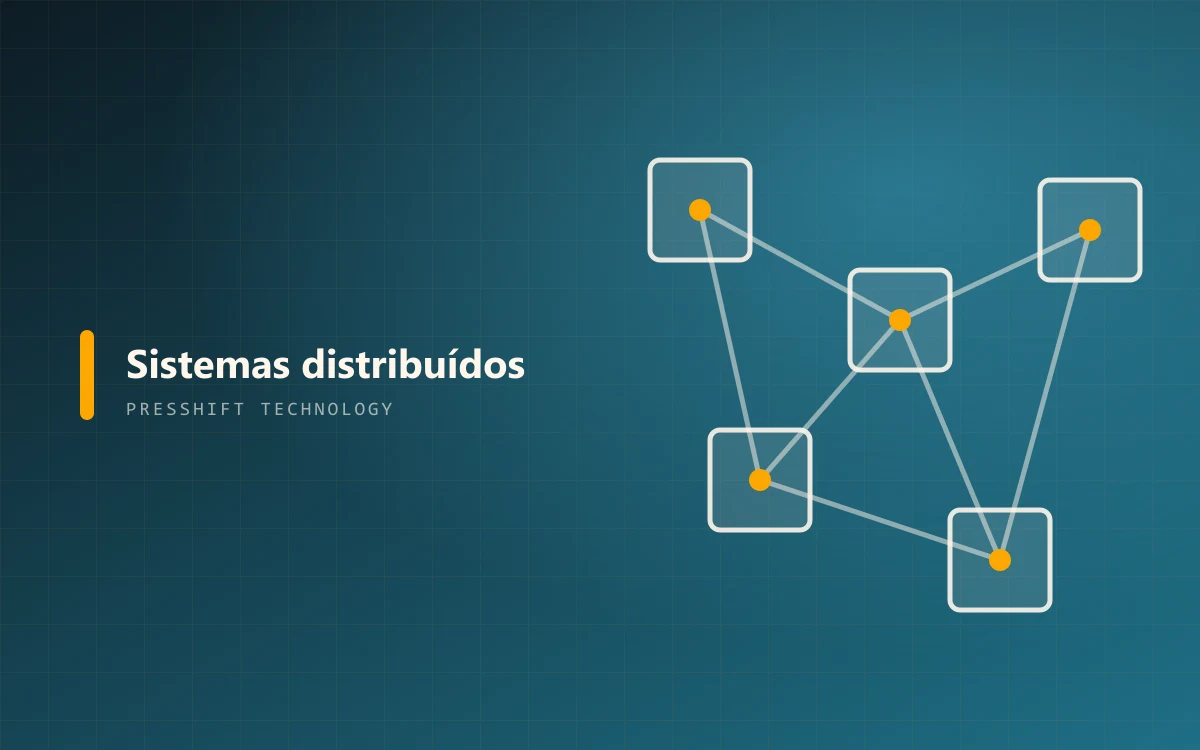
As technology advances and business demands grow, distributed systems have stopped being an architectural preference and become the normal way to build business software. The question is no longer whether a company will run several systems — it will — but whether those systems can talk to each other.
The quiet cost of isolated systems
Most of the companies we work with arrive with the same picture: an invoicing program, a spreadsheet for stock, another program for attendance, and a shared folder for contracts. Each one works. The problem is the space between them.
That space is filled by people copying data from one place to another. It is where typing errors are born, where departments end up with numbers that do not agree, and where hours disappear every month reconciling figures that should have matched from the start.
What interoperability means in practice
Interoperability is the ability of two systems to exchange information without human intervention and without ambiguity. In practice it rests on three decisions:
- An explicit contract. A documented API that states exactly what goes in, what comes out, and what happens when something fails.
- One meaning per concept. If "customer" in the sales system and "customer" in the invoicing system are not the same entity, no integration will fix the problem.
- One source of truth per piece of data. Every item of information has an owning system. The others read it; they do not copy it.
Why this matters more now
Three shifts have made the topic urgent. First, work no longer happens in a single building: the person selling is in the field, the person approving is in another office. Second, tax and reporting obligations have gone digital, and data has to leave your systems in formats defined by somebody else. Third, the new automation and artificial intelligence tools are only useful if they can read structured data — an intelligent agent cannot work on information that lives only inside a PDF in a folder.
How to build it without breaking what you have
You do not need to replace everything. The path we normally follow is this:
- Take inventory. Which systems exist, what data they hold, and who feeds them.
- Choose the source of truth for each critical entity: customers, products, documents.
- Expose an API on the owning system, instead of letting others connect straight to its database.
- Integrate one flow at a time, starting with the one that hurts most, and measure the time saved.
- Monitor it. An integration without alerts is an integration that will fail silently.
The result
Once systems talk to each other, the most visible change is not technical: meetings stop opening with an argument about which report is correct. Data becomes a shared fact, and the conversation moves on to what to do about it.
That is the work we do when we design modular platforms — each module with its own responsibility, all of them over the same database and the same rules.