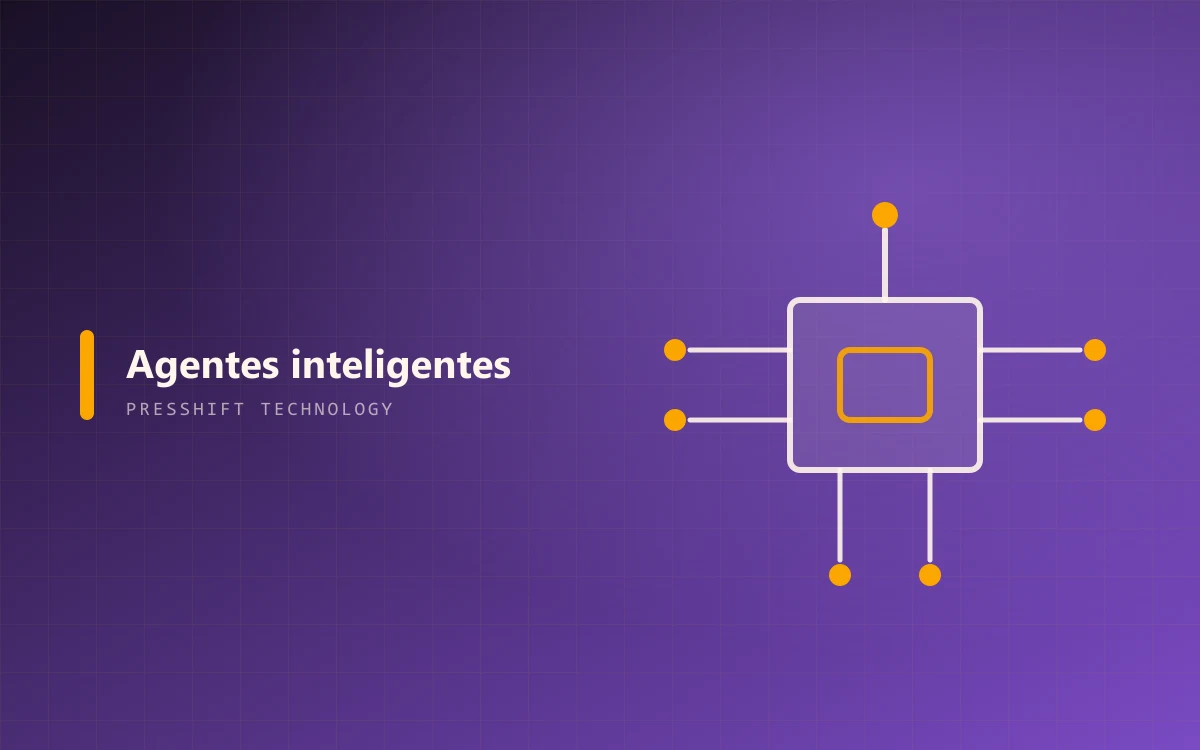
The word "agent" turns up in almost every technology presentation now, and almost never with a definition. Here is one worth fixing: an intelligent agent is software that takes an objective, works out the steps needed, and carries them out in the systems it has access to — asking a person for help when its confidence is low.
That last part is what separates it from a chatbot. A chatbot answers. An agent acts.
Three use cases that usually pay off
Not every process justifies an agent. The ones that pay off share three traits: volume, clear rules, and a reasonable number of exceptions.
- Document reading. Supplier invoices, delivery notes, contracts. The agent extracts the fields, checks them against your system and raises the discrepancies for a human to review.
- First-line support. Answers from your own documentation, escalates what it does not know, and logs everything it handled.
- Recurring reports and reconciliations. Work somebody does every week following the same steps, consuming a full day of a qualified person's time.
How to choose the first one
The first use case determines almost everything that follows. We recommend a simple test: pick a process that already has a measurable outcome today. If nobody can say how long it takes or how many errors it produces, you cannot prove the agent improved anything.
Avoid starting with the most critical process in the company. The first implementation exists so you can learn, and learning on month-end invoicing is expensive.
The guardrails we always set
An agent with access to company systems is a user account with the ability to act. We treat it as one:
- Least privilege. The agent sees only the data it needs and writes only where it must write.
- Human approval on irreversible steps. Sending a message to a customer, posting a document or deleting information requires confirmation.
- Complete logging. Every action is auditable, together with the information the agent used to decide.
- An evaluation set. A fixed set of cases with known answers, run every time the agent changes, so regressions are caught before they reach production.
How long it takes
A well-scoped first agent is usually working within a few weeks: one to understand the process and gather examples, two or three to build and evaluate, and a supervised period during which a person reviews what the agent produced before oversight is reduced.
What we never recommend is buying a platform first and then looking for a problem it can solve. The path that works runs the other way: a concrete process, a number you want to improve, and an honest measurement at the end.
If you would like to work out what the best first use case would be in your company, that is exactly the conversation we have in the first session.